Naples to Nanaimo: The Family Story Behind Columbus Meat Market
There are certain places in Vancouver that do more than serve a neighbourhood. They become part of its rhythm.
On Nanaimo Street in East Vancouver, Columbus Meat Market is one of those places. The line moves quickly, but no one seems especially bothered if they have to wait. There is too much to look at. Dry-aged steaks sit behind glass. Sausages, chops, roasts, marinades, dry meats, freezer meals, spices, panini, and prepared foods stretch across the shop in every direction. Staff move with the speed and confidence of people who know exactly where everything is. Regulars chat with the team. Someone asks for a specific cut. Someone else grabs a sandwich on the way out. Somewhere, almost certainly, there is soccer on.
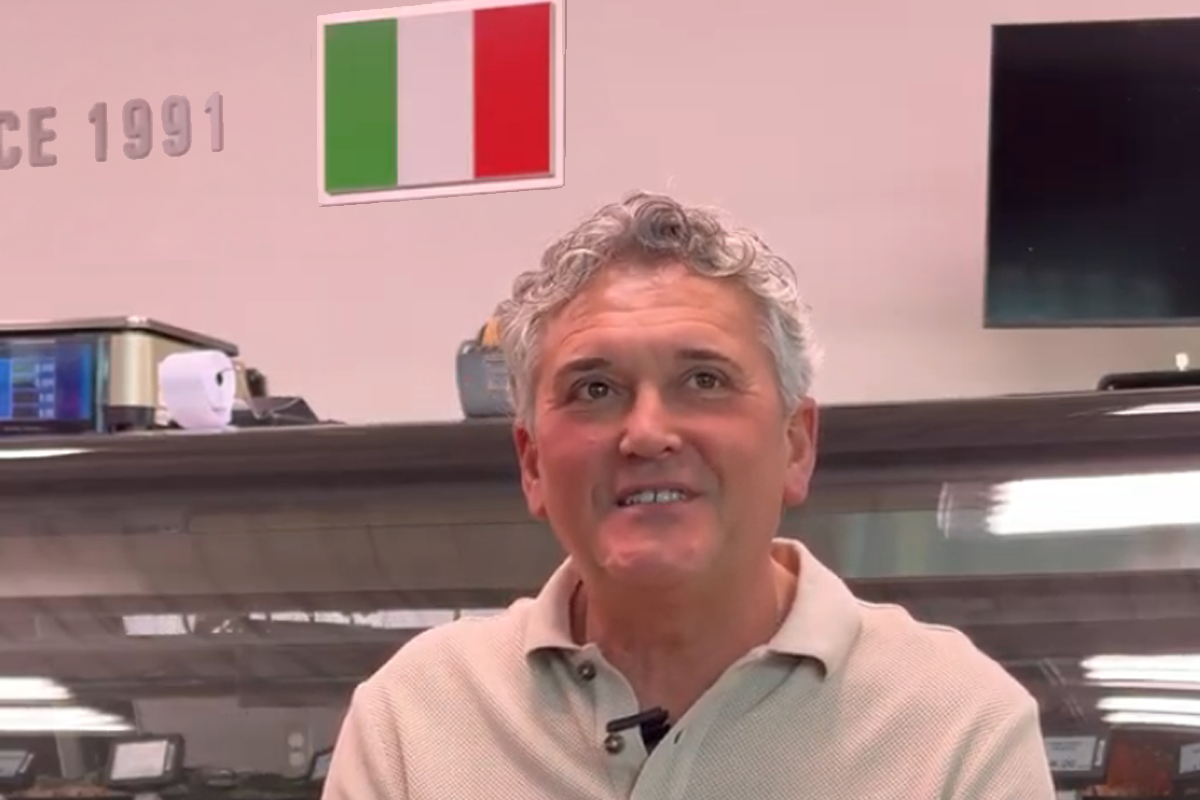
Behind the counter, Eugenio Masi watches over it all with the calm pride of someone who understands exactly how much work it takes to make a place feel effortless.
For customers, Columbus may feel abundant, almost overwhelming in the best way. The butcher counter stretches with extraordinary range. There are dry-aged steaks, housemade marinades, dry meats, freezers, spices, prepared meals, a hot kitchen, and eventually, a panino program. Every part of it reflects years of decisions. What to buy. What to cut. What to prepare. What to make easier. What to preserve. What to improve.
Eugenio believes in the fundamentals. Columbus still cuts sides of beef, something many butcher shops have moved away from. For him, that matters because it allows the shop to offer specific cuts, accommodate requests, and use the animal more completely.
“We never got away from that,” he says. “Having every single piece in your shop benefits your business.”
That philosophy did not begin in Vancouver. It began generations earlier, in a family where butchery was the way of life.
Eugenio was born in Italy, into a family of butchers. His great-grandfather began in Naples in a time before modern refrigeration, when the trade was less about polished butcher cases and more about buying, selling, and moving quickly. His grandfather later opened a small butcher shop in Potenza. After the war, Eugenio’s father took over, operating both a butcher shop and a bar with Eugenio’s mother.
“My mom was in charge of the bar. My dad was in charge of the butcher shop,” Eugenio remembers.
It was the family business, the family rhythm, and the family foundation.
The result today is something that feels both old-world and modern.
The dry-aged beef program began with one cooler. Demand grew, and now there are three. The marinades took years of work. The dry meats room was built by Eugenio himself and refined over time until it felt right. He wanted the product to remain homemade in spirit, not commercial.
“It still feels like homemade,” he says.
The panino program is another natural extension of that philosophy. The focaccia comes from local bakery, Pastaggio. The cold cuts are made in-house. There are six sandwiches, including Eugenio’s own favourite, the Gino, with capocollo, arugula, sun-dried tomato, and provolone.
Then there is the hot food. Pasta. Meatballs. Arancini. Fish on Fridays. Warm meals at lunchtime and dinnertime. Affordable, familiar, generous food.
“That was another thing that I always believed in,” Eugenio says. “Having a kitchen, a homemade kitchen.”
That feeling, the sense that a shop can grow without losing its soul, has always been central to the Columbus story. It is also part of what makes Eugenio’s work so interesting. He is a traditional butcher, but not a nostalgic one. He respects the old ways without being trapped by them. He studies Italian butcher shops. He watches what customers need. He adjusts. He builds. He adds.
At the same time, he has constantly adapted to the way people shop now. In 2010, he began developing marinades and moving toward selling steaks by the piece rather than only by weight. The idea was practical and customer-focused. If someone was hosting five people, they could look into the case, see the price of each steak, and understand what dinner would cost before committing.
Life was getting expensive, Eugenio explains. Families needed clarity. Customers needed to be able to plan.
It was a simple idea, but an important one. A $12 steak is easier to understand than a price per kilo. A case full of ready-to-cook cuts makes dinner easier. A marinade makes the next step obvious. A spice rack beside the meat helps complete the thought. A panino gives hungry customers a reason to leave with lunch as well as groceries.
Adaptability has been a key part to Columbus’s success over the years.
During the pandemic, many of Columbus’s hotel and restaurant customers were shut down. One of them had typically taken a lot of bones for stocks and soups. Suddenly, Columbus had freezers full of bones and nowhere for them to go. Then Eugenio’s brother Giancarlo noticed bones being sold in a basket at T&T and suggested they try something similar.
They started selling bags of bones at a very good price.
People came.
The bones moved.
A practical solution became a ritual.
“It helps bring people in,” Eugenio says. “It helps get away your bones.”
It is a small story, but a revealing one. Columbus is full of these small acts of adaptation. Nothing is wasted. The family watches, listens, solves, and keeps going.
That instinct, to move forward when circumstances demand it, is not new to Eugenio or his family.
It was twenty five and a half year ago when their lives were forever changed.
“The earthquake came in 1980, November,” Eugenio recalls.
“We lost everything. We lost the home, we lost the shop, we lost everything.”
I was the 23rd of the month; Gino’s birthday.
The 6.9 magnitude earthquake that struck Southern Italy that day was devastating. 250,000 people were made homeless - Eugenio’s family among them.
Eugenio was 14 when he arrived in Canada in January 1981. It was, as Eugenio describes it, a rush. His brothers were already in Vancouver, and after the disaster, the family made the decision to join them.
For Eugenio, the adjustment was immediate and difficult. He arrived in a new country, in a new city, with a new language he did not yet speak.
“I didn’t even know English,” he says. “Not even hi.”
He went to school in Vancouver, worked in butcher shops, worked at SuperValu, and began slowly building a life in a place that was still unfamiliar. At home, the family spoke Italian, which made learning English take longer. But as Eugenio puts it plainly, there was no way around it.
“Over the years, you have to learn. You have no choice.”
The scale is impressive. More than 60 people work at Columbus. The shop does significant restaurant business. It supports weddings, catering, community events, and Italian Day on the Drive, where Eugenio estimates that nearly all of the sausages used on the street come from Columbus.
But what stands out most is that the business still feels personal.
Eugenio returns again and again to the same word: community.
“We’re so glad to have a community that supports us,” he says.
That support goes both ways. Columbus sponsors soccer teams. It supports Italian Day. It serves longtime customers, families, restaurants, and new generations discovering the shop for the first time. Eugenio understands that the loyalty Columbus receives has been earned over decades, one order, one conversation, one dinner table at a time.
His father used to tell him that the best advertising was word of mouth. Eugenio still believes that.
“When you go out to a dinner table and you have a good meal, they always ask you where did you get your meat,” he says.
That, in many ways, is the Columbus story. It travels from counter to kitchen to table to conversation, then back again.
At the time Eugenio arrived in Vancouver, the Italian community was concentrated in a few key pockets. There was Commercial Drive, of course, but also the East Hastings corridor and the neighbourhood surrounding where Columbus now stands. There were Italian coffee bars, butcher shops, grocers, and gathering places. There were shops where families bought meat, pasta, panini, and imported goods in the old style, shopping in person, asking questions, and trusting the person behind the counter.
The city has changed since then. Italian products are easier to find now. Good Italian food has spread across Vancouver. But Eugenio remembers a time when that community felt more concentrated, when the butcher shop was not simply a place to buy dinner, but part of a weekly family ritual.
The original Columbus location was on Renfrew and First. When the block was sold for redevelopment, the family had to move. Eugenio had already been watching a corner building on Nanaimo Street for years. It had traffic, visibility, and potential. At the time, the building was divided into separate spaces: a laundromat, a small computer room, and an architectural business. In 2016, Columbus moved in. In 2022, the family purchased the building.
That move helped shape the Columbus that customers know today.
The new shop was larger, brighter, and more expansive. The old location had been around 4,800 to 5,000 square feet. The new one is around 6,400. With more room, Eugenio and the team could build the kind of shop he had been imagining.
But Columbus was never supposed to be the thing that kept him in Canada forever.
After several years in Canada, Eugenio went back to Italy. In 1989, he returned to serve in the army and stayed for nearly two years. Part of him wanted to remain there. He thought about reopening his father’s shop. He thought about building a life in the place where his family’s trade had begun.
But his family was in Canada. His brothers were here. The future, whether he knew it or not, was pulling him back to Vancouver.
When Eugenio returned, he thought it might only be temporary. Around that time, his brother Vito’s butcher shop closed. Vito heard that Columbus Meat Market was for sale. The shop had originally become Columbus in 1973, after being taken over and renamed by Armando Belmonte. By 1991, the owner was ready to retire.
Eugenio’s brother suggested they buy it.
Eugenio agreed, but with one condition in mind.
“I’ll buy it, but I’ll help you, but I don’t want to stay,” Eugenio recalls. “Maybe I’ll go back to Italy.”
Then he pauses on the thought with a smile.
“Where we are today? I never moved home.”
Life happened quickly. Eugenio met his wife, who had moved from Rome to Canada. They married, started a family, and the business became not a temporary stop, but the centre of a life. Alongside his brothers, Eugenio helped grow Columbus Meat Market from a respected local butcher shop into a genuine Vancouver institution.
The public sees the line, the abundance, the charm. Eugenio sees the systems behind it. The buying. The staffing. The cleaning. The preparation. The quality control. The responsibility.
That same discipline extends behind the scenes. Columbus is open Monday to Saturday. Sunday is technically the day off, but Eugenio still spends a few hours at the shop setting up for Monday. Every Saturday, a team takes the shop apart and sanitizes it from top to bottom. There is nightly cleaning, but Saturday is different. Showcases, equipment, everything is broken down and rebuilt clean.
“There’s a lot of work to please the customers,” he says. “And if something is not right, we try to make it because we’re not perfect.”
That humility is part of his appeal. Eugenio is proud, but not polished in a way that feels rehearsed. He speaks like someone who has been too busy building the thing to mythologize it. He knows the product. He knows the customers. He knows the cost of things. He knows what it means to lose everything and begin again.
Ask him his favourite cut of meat and he does not overcomplicate it.
“Ribeye,” he says.
How does he cook it?
“Medium rare. Barbecue.”
Seasoning?
“No. Straight up.”
A favourite sausage?
“Simple one. Black pepper and salt.”
With the ribeye, he would drink a nice Barolo. Maybe an Amarone. His coffee is short and strong. His favourite spots are mostly longtime Italian rooms, places with history, family, familiarity, and relationships: Caffè Calabria, Marcello, Baci, L’Artista. Places that, like Columbus, are held up by regulars and memory as much as by food.
On Sundays, after the shop is set up for Monday, there is family time. And soccer, of course. Columbus is known for soccer. The game is part of the shop’s atmosphere and part of the family’s language. When Italy loses, Eugenio jokes, his brothers come back upset and he is thankful to be hiding in the back.
It’s an amusing image, but also a fitting one. Columbus has always been a family story. Brothers, sons, parents, customers, staff, suppliers, restaurants, and community all folded into one living operation.
What began generations ago in Southern Italy has become something deeply Vancouver. A butcher shop shaped by Naples and Potenza, East Hastings, Commercial Drive, Renfrew Street, Nanaimo Street, and every customer who has stood in line.
For more food stories like this, check out our weekly newsletter.