Okay, Type A people, get ready…because I went to Japan and Japan is a country that rewards planning!
Booking events, sold out tickets, bullet trains, romance car tickets, reservations, knowing how the freakin baseball playoff matchups are going to get set, where and when to shop, knowing where the muscle boys bars are and when they open, knowing the deep, dark corners of the city where I can politely enjoy an egg salad sandwich without nasty looks from literally everyone, etc.
You can spend weeks organizing the perfect trip. Booking a sushi omakase three months in advance. Finding the fluffiest pancakes in Tokyo. Reserving a visit to a pig café. Finding the perfect vinyl listening bar. Knowing the secret 7/11 spots and angles for the best Instagram pic. Getting tickets for Kabuki theatre, something you've never heard of, but suddenly absolutely need to do because you watched a movie on it on the plane ride over that was pretty good, but featured Ken Watanabe so actually it was great. It’s called Kokuho, set in post-war Japan's economic boom, gangster family-born Kikuo Tachibana finds himself adopted by a kabuki actor. Despite life's challenges, he….I’m getting off track.
Anyways, honestly, I love all of it too. I’m a planner!
But after spending time eating and drinking my way around Japan, some of my favourite nights had absolutely nothing to do with reservations. They involved walking down an unfamiliar street, spotting a little red lantern, or a packed countertop with open flame right behind it, or looking through a doorway with waving flags, and deciding that whatever was happening inside looked like something you couldn’t fly all the way here for and pass on.
Welcome to the izakaya.
Part pub, part restaurant, part neighbourhood gathering place, the izakaya might be Japan's greatest contribution to the art of having a night out.
It's a little like a British pub, a Spanish tapas bar, and your favourite neighbourhood restaurant all rolled into one. I feel so romantic about the idea of sitting in the Winchester Beagle (or something like that) and ordering a 20oz pint of warm, hand pumped ale with a side of chips and mutton stew or whatever. Pinxtos with sangria on the beaches of Barcelona. What I look forward to on an izakaya menu might be twenty different kinds of grilled chicken skewers, or a beautiful plate of sashimi, or Japanese potato salad, or stewed pork intestines, or something involving a fish you've never even heard of.
And there's no need to organize dinner into appetizers and mains. Order a beer. Get some food. Order another beer. Get more food. Maybe light a cigarette.
What Is an Izakaya, Anyway?
The word izakaya (居酒屋) comes from the Japanese words associated with staying and drinking at a sake shop.
During Japan's Edo period, sake merchants began allowing customers to drink inside their establishments rather than buying alcohol to take home. Food eventually became part of the experience, and over time, these little drinking spots developed into the izakayas we know today. A few hundred years later, the basic idea remains remarkably similar. You go somewhere to drink, eat, and spend time with people.
Japan can be an orderly place. It’s the best, and seeing a society can function with respect and politeness is so inspiring…but can also feel alienating (and sometimes disturbing). People line up properly, trains run on time, nobody jaywalks (like, NEVER), there’s zero graffiti on any walls, and nobody seems particularly interested in having any type of conversation on public transit. I mean, there are hanging, paper advertisements hanging in the train. Put those in any North American city and they’re lasting like, ten minutes before they’re ripped down or covered in cartoon dicks? Yes, it’s THAT orderly. No dick drawings anywhere!
Then you walk into a busy izakaya on a Friday night. This is where coworkers unwind after long days, where friends catch up, where couples go on dates, and where regulars spend evenings talking to the same person who's been pouring their drinks for years. Suddenly, everybody's laughing, somebody's shouting another order toward the kitchen, there's smoke coming off a charcoal grill, and a table of coworkers is finally letting loose.
You don’t need to know much to enjoy an izakaya - that’s part of the appeal - but in honour of the orderliness that the Japanese do best, here are a several tips for having the absolute best time, whether you’re in Tokyo, Kyoto, or anywhere else.
9 Tips for Having the Best Night at a Japanese Izakaya
1. Learn Five Japanese Phrases. You'll Be Fine.
You don't need to speak fluent Japanese to have a great night, but learning a few words makes everything easier.
Sumimasen means excuse me, and it's how you can politely get someone's attention.
Osusume wa nan desu ka? means what do you recommend?
Nama biru is draft beer. Add kudasai (please) when ordering.
Kanpai! means cheers.
And okaikei onegaishimasu means you'd like the bill.
Oishii means delicious/tasty (isn’t that cute?)
That's already enough Japanese to get yourself into a very enjoyable evening. A little effort also goes a long way. Even if your pronunciation is terrible, people generally appreciate that you're trying.
2. Ask the Chef What Their Number One Dish Is
Instead of immediately ordering everything you recognize on the menu, ask the person behind the counter what they recommend. Not necessarily what's most popular. Most izakayas, especially the stalls, have a specialty.
Maybe they received some beautiful fish that morning. Maybe there's a seasonal vegetable they're particularly excited about. Maybe the restaurant is known for a dish that doesn't look especially interesting in the photograph. The answer might be something you've never heard of. Good! That's the point.
And if you're sitting at the counter, asking about the food can turn into a conversation. Suddenly you're learning about ingredients, regional specialties, and the person making your dinner.
It’s how I ended up eating stewed pork intestines…which were great!
3. Try Something You Don't Recognize
Japan is an extraordinary place to eat seafood, and izakayas are a fantastic way to explore it. Sashimi, grilled fish, squid, scallops, mackerel, tuna, shellfish. Some places have handwritten lists of whatever arrived that day.
But don't stop at seafood.
Try yakitori cuts you wouldn't normally order. Get the Japanese potato salad. Order a seasonal special. Ask about the little bowl somebody beside you is eating. Throw some hearts in your mouth! You don't need to love everything. That's just part of travelling. Hey, I ordered the chicken sashimi and I’m still walking around.
4. Don't Order Everything at Once
This is one of the easiest mistakes to make. You sit down hungry, see twenty things you want to eat, and immediately order enough food for six people. Don't. The beauty of an izakaya is that the meal develops gradually.
Start with a couple of dishes. Have a drink. See what comes out of the kitchen. Order something else.
Maybe the sashimi is so good you want another plate. Maybe somebody at the next table gets something that looks incredible. Maybe the chef suggests something completely different. You want to leave room for those decisions.
Plus, ordering everything immediately turns a wonderfully relaxed evening into a logistical problem involving too many little plates. Nobody needs that. Also the chef and everyone inside will know you’re new.
5. Order a Kaku Highball
If there's one drink I'd encourage everyone to try at an izakaya, it's a Kaku highball.
You'll often hear it called Kaku Hai (角ハイ), which is short for a highball made with Suntory Kakubin whisky.
Kakubin was introduced in 1937, and its name comes from its distinctive square-shaped bottle. Kaku refers to its angular shape, while hai is short for highball. The drink itself is beautifully simple. Japanese whisky, plenty of ice and cold soda water, hopefully with a little lemon. It's crisp, refreshing, and absolutely perfect with salty food, fried chicken, grilled skewers, or a plate of sashimi.
You'll often see it served in a big glass mug with the Suntory logo on the side. It's also a drink that makes sense economically. You're not paying for an elaborate cocktail, and you don't need to think too hard about what you're ordering.
Just say Kaku Hai, kudasai.
6. Sit at the Counter Whenever You Can
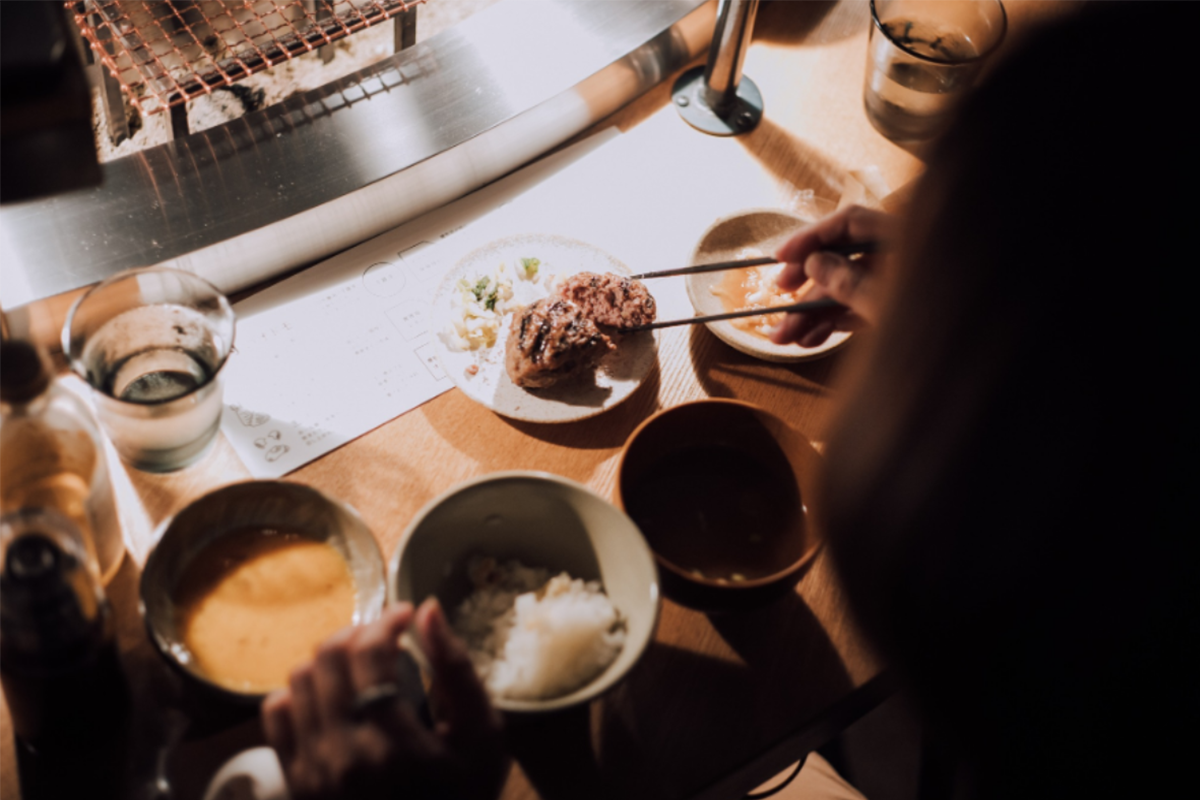
I love sitting at the bar in Japan. Particularly at izakayas. It's where everything happens. You can watch somebody grill yakitori, slice fish, pour drinks, prepare little plates, and somehow keep track of an entire restaurant without writing anything down.
You might get to talk to the chef. You might see what the regulars order. You might end up having a conversation with somebody sitting beside you. And even if none of that happens, watching the kitchen work is entertainment in itself. It’s what Anthony Bourdain would do, and when we’re travelling and eating, isn’t that what we’re all trying to capture?
If you're travelling alone or as a couple, I'd choose counter seats almost every time. A table is fine…but the counter is where you feel like you're actually part of the place.
7. Be Okay With a Little Cigarette Smoke. Sometimes.
Japan has become much stricter about indoor smoking, and plenty of restaurants and izakayas are completely smoke-free. But many smaller establishments still permit smoking under specific rules or exemptions.
Yes, this means you might occasionally walk into a tiny bar, sit down, and realize somebody beside you is enjoying a cigarette with their whisky. If you're sensitive to smoke, check before entering. Smoking rules and designated areas are usually indicated near the entrance. If you're comfortable with it, though, the occasional smoky little drinking spot can be part of the experience.
Not every night needs to smell like charcoal and cigarettes. But some nights do.
8. Don't Panic When Food Arrives That You Didn't Order
You're sitting down, looking at the menu, and somebody brings you a little dish of food. You didn't order it. You didn't ask for it. And now you're wondering whether you've accidentally agreed to buy something. What. Is. HAPPENING!?
It’s otoshi!
At many izakayas, a small appetizer is served automatically as part of a per-person seating charge.
It might be pickled vegetables, a little salad, something simmered in broth, or a seasonal dish from the kitchen. The charge is often a few hundred yen, although it varies by establishment. It's normal.
Think of it as a little welcome snack that also helps cover the cost of occupying a seat. Most of the time it's surprisingly delicious. And sometimes it's something you probably wouldn't have ordered yourself, which makes it a nice introduction to the evening.
9. Look at the Handwritten Specials
Some of the best things on an izakaya menu aren't on the menu. They're written on little strips of paper hanging behind the counter, scribbled onto a chalkboard, or tucked into a separate sheet that changes every day.
These are often the seasonal specials. Fresh fish. Regional vegetables. Something the chef picked up at the market and is excited about. A dish that only appears for a few weeks every year. If you can't read Japanese, use your phone to translate the menu or ask the staff for help.
And if something sounds interesting, order it. A lot of Japanese cooking is built around appreciating ingredients at their best, and those daily specials can be a wonderful way to experience that.
Okay! Now you are equipped for any night at, or jumping between, izakayas. In the next part I’ll show you where to find the best izakaya neighbourhoods in Tokyo and Kyoto. Stay tuned!
AUTHOR: Hogan short
Follow me on Beli and see my ranked lists in every city I’ve been to!
Follow me on Instagram and see other stuff I get up to!
For more food stories like this, check out our weekly newsletter.