How One Life-Changing Dining Room Helped A Chef Find His Way Back to His Own Story
There is a particular kind of confidence that settles into a room when a chef is exactly where they’re meant to be.
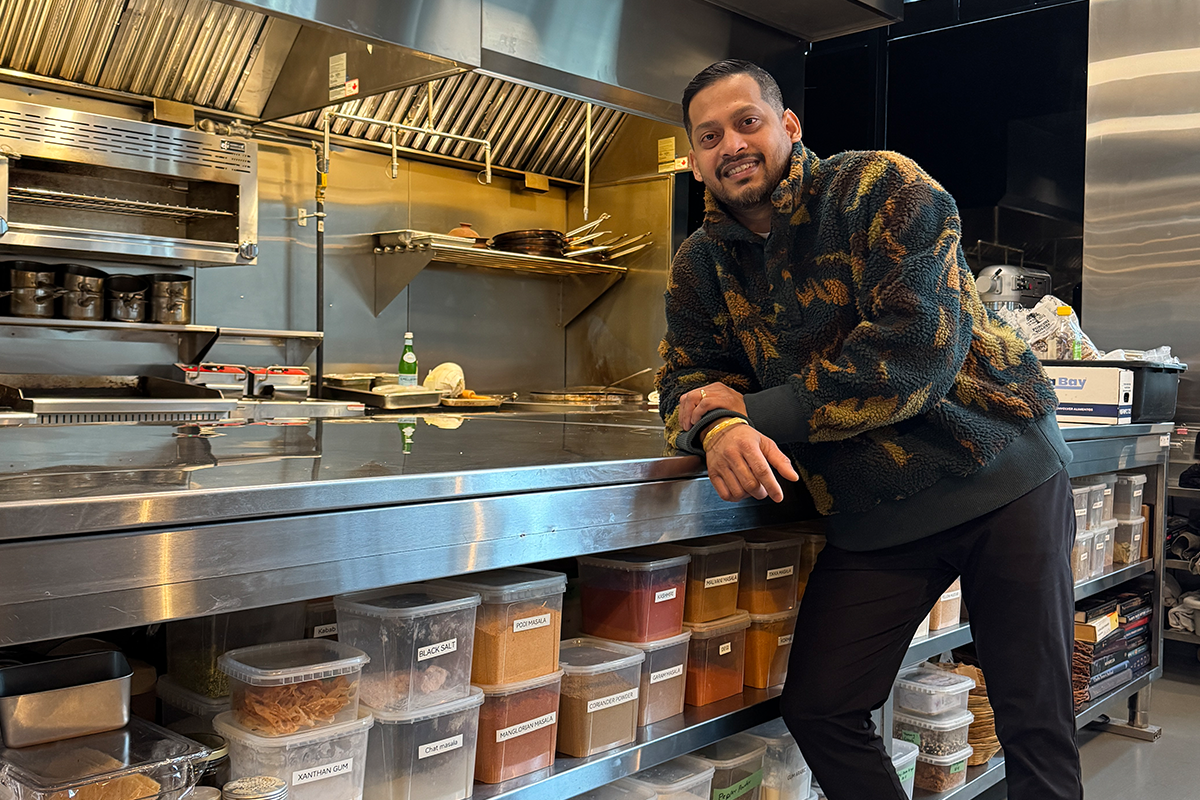
At Kavita, it shows up in the open kitchen first. Nothing is hidden. The dining room folds into the line. Guests sit just feet from the pass, watching dishes come together in real time. It is exposed, deliberate, and quietly assertive. This is not a place trying to impress you with theatrics, but foster a quiet and open conversation from patron to host.
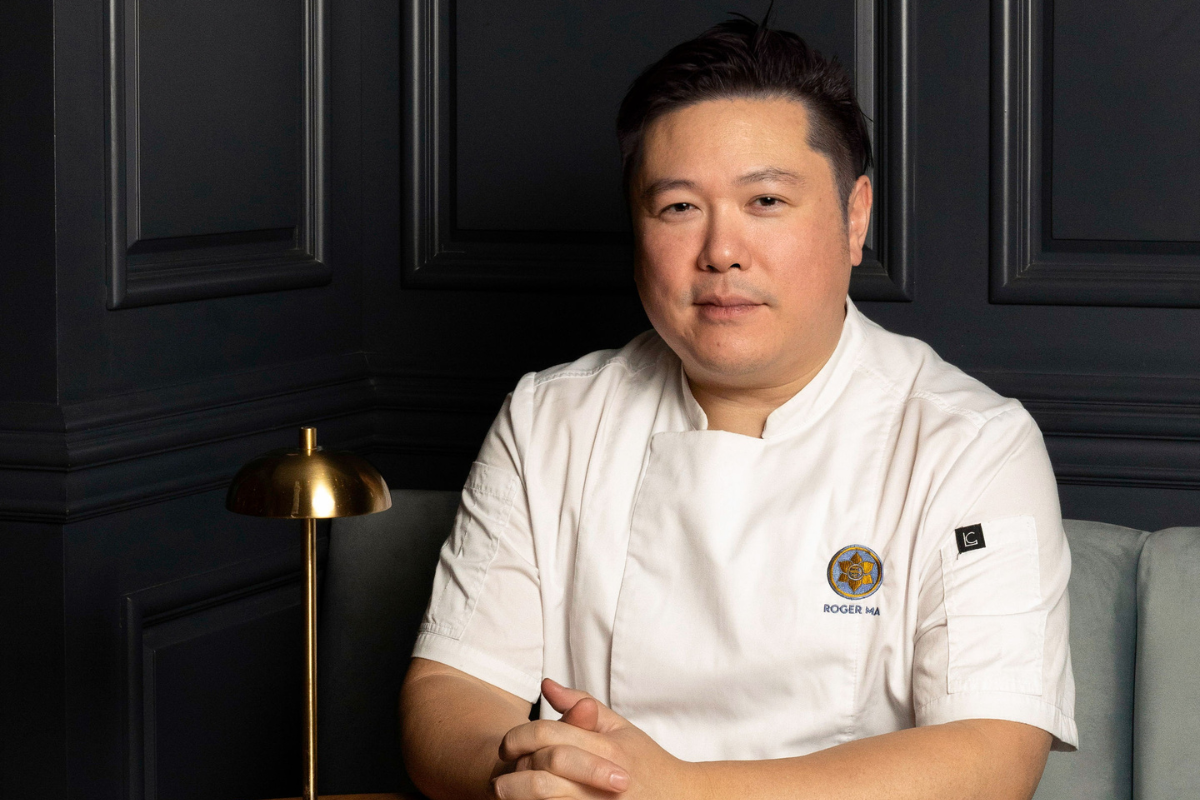
For executive chef and owner Tushar Tondvalkar, that clarity took years to arrive.
Tushar spent nearly five years searching for the right space. Not just any room, but one that would allow him to build the restaurant he had been imagining. “I checked out so many spots,” he says. “Nothing was too interesting for me, the location or the layout.” What changed was the opportunity to design his own kitchen. “When I got the opportunity to design my own kitchen, I thought this is it.”
That decision wasn’t just about workflow. It was philosophical.
“I have worked at open kitchens most of my life,” he explains. “When you serve your guest and see their reaction… you can go and communicate right away.” For him, an open kitchen is not a feature. It is a form of accountability, and a way of collapsing the distance between cooking and hospitality. “I think chef-driven restaurants should have open kitchen.”
But the story of how Tushar arrived here, in Mount Pleasant, leading a restaurant that feels fully his, does not begin in Vancouver. And it doesn’t begin in the kitchen at all.
It begins, more quietly, with a question he didn’t know he needed to ask.
Although he was born and raised in Mumbai, for much of his early career, Tondvalkar was cooking Pacific Northwest cuisine. And that wasn’t unusual. In fact, it was the expected path. He had moved to Canada in 2012 to study hospitality and tourism, eventually settling in Vancouver after a brief and less-than-romantic experience with Ontario winters. “I moved here in February,” he recalls, laughing. “Then summer kicked in… it was just magical.”
Vancouver became home. It offered proximity to nature, access to ingredients, and a lifestyle that made sense. But professionally, something was still unresolved.
The shift came in Gaggan.
Tushar packed his bags and moved to Bangkok on a one-way ticket to work at the globally celebrated restaurant, at the time one of the most influential dining rooms in the world. What he encountered there would change the trajectory of his career.
“When I saw 25 courses of Indian food,” he says, “it was mindblowing.”
At Gaggan, Indian cuisine was reframed entirely. It was playful, cerebral, emotional. On the menu, dishes were presented as emojis instead of descriptions. On the palate, flavours were distilled into moments. It was both deeply rooted and completely reimagined.
The impact was monumental. “I was hallucinating about food,” he says. “Every night I would go to sleep and I was just thinking about food…”
More importantly, it forced a confrontation.
“Why am I cooking Pacific Northwest food?” he remembers thinking. “My culture has so much history.”
That realization did not immediately translate into a restaurant. Instead, it sent him back to the source.
To Tushar, most Canadians recognize Indian cuisine as butter chicken, naan, or dosas. But India has over thirty-five states and territories and each has it’s own rich history of cuisine. The staples we’ve grown to enjoy descend from only a couple regions, meaning so much of Indian cuisine has yet to arrive at the shores of the Western zeitgeist. It’s a point to which even Tushar can relate, “I didn't grow up eating any of those things, except for dosas because it’s Southern India where I’m from.”
So to unlock a thorough immersion in his country’s cuisine, he began returning to India with a different kind of focus. Not to cook, but to observe. To stand at street stalls with a notebook. To watch, taste, and absorb. “There’s no cookbooks on them,” he says. “If you want to learn, you have to stand there and just observe.”
What he found was not a singular cuisine, but a mosaic. Regional, seasonal, and deeply contextual. “How do you define Indian food,” he asks, “when every province has a different food and a story to tell?”
That question sits at the core of Kavita.
The restaurant’s tasting menu, called Ammākase, translates loosely to “taste of the motherland.” It unfolds as a journey through regions, beginning with snacks from different parts of India before moving into composed courses that reflect both tradition and interpretation. It is not an attempt to modernize Indian food for the sake of it. It is an attempt to represent its breadth.
“Indian food in general is a feast of tasting,” he explains. “Even at home, it’s five or six dishes, all served at once.” Kavita simply reimagines that instinct through a different structure.
But if Gaggan was the moment of creative awakening, Kavita is something more personal.
The restaurant is named after his mother.
“Kavita is my mom’s name,” he says. “It means poetry, poem, script.” The meaning is not incidental. It reflects how he sees the food itself, as a form of storytelling. “We’re trying to share the story.”
That sense of purpose extends beyond the plate.
Tushar’s team is small, tightly knit, and in many cases, drawn from his hometown of Mumbai. “Everyone’s proud,” he says. “Everyone cares.” There is a shared belief in what the restaurant is trying to do, and in what Indian food can represent within Vancouver’s dining landscape.
It also shapes how he thinks about the space itself. Having built his career through pop-ups and collaborations, he is now committed to creating opportunities for others. “When I needed support, I had,” he says. “I want to open this space for the industry.”
In that way, Kavita becomes something else entirely. Not just a destination, but a process of perpetual reflection.
It took years of patience for Tushar to find the right place and moment to bring his vision to life, but what makes the story compelling is what happened along the way: discovering a deeper sense of identity from a place that was neither home nor heritage.
With Kavita he has a powerful room shaped by Mumbai, sharpened in Bangkok, and realized in Vancouver.
A dining room that captures the transformation one chef saw his own story, and a restaurant where that story is now being told, course by course.
For more food stories like this, check out our weekly newsletter.