Chef Rob Belcham: Redefining Sustainability
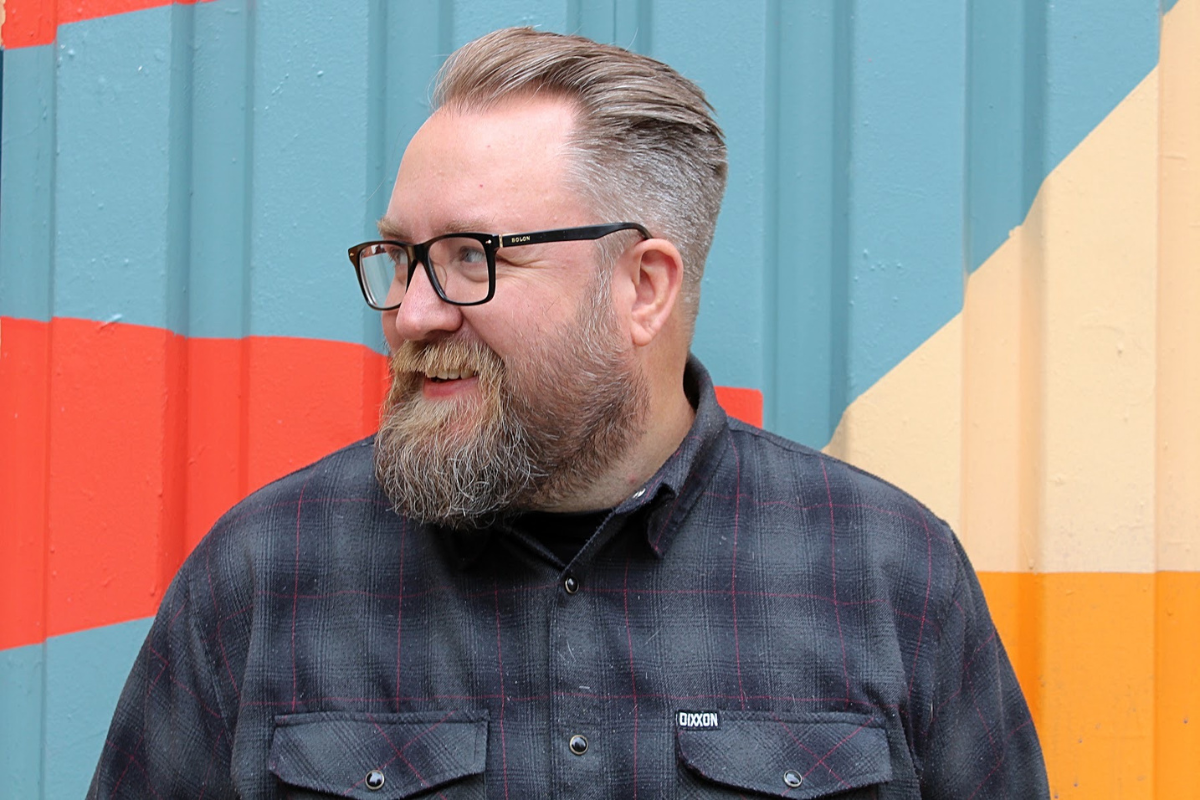
While Rob Belcham may meet the title of “media personality” with an air of exasperation, there is no doubt that his reputation as a hospitality icon precedes him. Restaurateur, chef, podcaster, mentor, and community builder, Belcham’s impact on Vancouver’s culinary landscape has been broad, and perhaps more importantly, enduring.
His early restaurant endeavours remain firmly rooted in the city’s collective memory. Fat Dragon, for example, occupied a largely uncharted space between Asian cuisine and smokehouse tradition. The menu combined techniques and flavours that felt deliberately unfamiliar when intertwined, while remaining committed to showcasing quality ingredients. Ask anyone who visited Fat Dragon during its run and they’d be hard-pressed to suggest anywhere else serving half a smoked pig’s head or pig snout fried rice.
Dishes like these are clear expressions of one of Belcham’s longest-standing culinary preoccupations: sustainability.
The thinking was instilled, in part, during his years working with Chef Robert Clark at C Restaurant, where he witnessed the early conversations that would eventually lead to the development of the Ocean Wise program. Clark’s approach to sustainability was initially driven by a desire to source the best seafood possible - an ethos that weighs heavily for those occupying coastal space in the Pacific Northwest. In pursuit of actualising this practice, they discovered that quality ingredients and responsible harvesting were inseparable. The people taking the greatest care of the ocean were also producing some of its finest products.
Belcham remembers the thinking around Clark’s desire to move chefs away from ingredients like Chilean sea bass, which had become ubiquitous on North American menus despite serious concerns around overfishing and sustainability. Why, they asked, were Vancouver restaurants importing seafood from thousands of kilometres away when extraordinary products were available from local waters?
That question transformed into a broader commitment to understanding where ingredients come from, seeking out the best product, sourcing it as locally as possible, and using it responsibly.
For Belcham, there was another reason to take that philosophy seriously. He believes what chefs normalise in restaurants eventually finds its way into home kitchens, resulting in a measurable influence on what people eat, and how they eat it. Put something unfamiliar on a menu, make it delicious, explain why it matters, and the guest may eventually become curious enough to try it themselves. Rob aptly cites chipotle as one example, which remained largely unknown to the home cook until chefs like Mark Miller and Bobby Flay familiarised it.
This overarching dedication to sustainability became especially apparent at Campagnolo, where whole-animal cooking, processing, preservation, and a near-obsessive approach to utilisation became central to the restaurant’s identity. Whole scallops were broken down and used from roe to mantles. Garum (fermented fish sauce) was produced in-house. Heritage-breed pigs were sourced whole, requiring the kitchen to find a use for every part. At one point, the restaurant was processing roughly eight pigs a month. Belcham estimates that the team processed more than 400,000 pounds of pork throughout Campagnolo’s lifetime.
Belcham’s affection for offal and old-world cooking techniques meant that ingredients often dismissed as undesirable could become some of the most memorable things on the menu. Inspired by a technique he had encountered during his time at The French Laundry, he developed a dish that involved braising the head, forming it into a cylinder, slicing, and frying it. At C, where diners might have been less receptive to seeing “pig head” printed on a menu, he gave it another name: crown bacon. More than a clever turn of phrase, “crown bacon” became testament to the fact that people are often willing to challenge their preconceived notions when the food itself makes an argument against them.
The same principle extended to Campagnolo’s preservation program. Seasonal fruits and vegetables were frozen, fermented, or otherwise preserved, bringing the logic and function of homesteading into a contemporary kitchen. The work was immense, but Belcham remembers it as one of the things that made cooking so rewarding.
“It just made it so much more fun to be a cook,” he says.
However, running a restaurant that executes whole-animal butchery, charcuterie, preservation, and extensive in-house production requires space, labour, and time in excess - commodities that have only become increasingly difficult to find.
Some of Belcham’s most difficult professional experiences would eventually force him to confront another definition of sustainability entirely: whether the people running restaurants could sustain themselves.
Fat Dragon sat at the crux of this realisation. Shortly after the lease was signed, Belcham’s business partner and long-time collaborator Tom Doughty suffered a stroke. For Belcham and all those involved, the impact was undeniable. The new restaurant had to be opened and operated while the existing businesses continued to demand attention. At the same time, Fat Dragon’s location proved challenging and Belcham’s personal life contained difficulties of its own.
Doughty spent more than a year recovering before ultimately deciding that the stresses of restaurant ownership were no longer something he could take on. Even so, Belcham refuses to position Fat Dragon’s eventual closure as a direct consequence of the illness. The circumstances were considerably more complicated than that. Eventually, the decision was made to give the restaurant one year, along with a finite amount of money. When that money was gone, the experiment would end.
And one year later, it did.
There is no bitterness in the way he tells the story. If anything, it seems to have sharpened his understanding of the ways in which the restaurant industry can ask too much of the people inside it. That realisation became even more pronounced during COVID, when Campagnolo closed its doors and never reopened. In hindsight, Belcham describes it as both the worst thing to happen to him and one of the best.
After years of treating exhaustion as commonplace, Campagnolo’s closure finally afforded Belcham enough distance to recognise the cost of the culture he had been participating in. If a restaurant can only function because people are working themselves into the ground, the restaurant itself is not sustainable.
That belief now sits near the centre of Belcham’s work with the Chef’s Table Society of British Columbia, which is dedicated to creating a culture that supports the sustainability of the individuals working within it.
Cook’s Camp is among the clearest expressions of that mission.
Held at North Arm Farm in Pemberton, the annual gathering brings chefs together to celebrate food, education, agriculture, and community, while deliberately rejecting the idea that a culinary event must demand two days of relentless work.
Belcham’s message to participants is often straightforward: take a nap, go for a walk, sit under a tree, and make time to experience where you are.
For much of its history, the restaurant industry has celebrated endurance. Seventeen-hour days, no days off, and perpetual exhaustion are often worn as strange badges of honour. Belcham now sees those behaviours for what they are: evidence of a system that depends on people sacrificing themselves to keep it running.
Cook’s Camp challenges these norms by way of education and experience. Past activations have included sustainably sourced bluefin tuna brought up from California and butchered in front of attendees, allowing cooks to see the entire animal and understand how much more there is to a fish than the portions that typically arrive on a restaurant station.
Meanwhile, attendees learn new techniques, meet peers, and share why so many of them entered the industry in the first place. The goal is not merely to create better chefs, but to create a better industry.
That same philosophy is present in another of the Chef’s Table Society’s projects: The Commons. Belcham’s vision for the space has been brewing for years, fuelled in part by his own longstanding relationship with cookbooks and the knowledge contained within them. The collection now represents thousands of pieces of culinary history, with more than 4,000 books, alongside periodicals and archived menus.
When asked about the most striking publication in the collection, Belcham quickly supplied a nineteenth-century household management book on loan from John Bishop, filled with recipes and instructions for running a household. The publication represents ideas that don’t necessarily map onto the current moment, yet offer a rare look into traditions that belong to a shared hospitality history. There are also collections of family recipes, including a book belonging to Robert Clark’s grandmother containing hyper-regional recipes from Quebec.
Their value isn't necessarily culinary prestige. It is continuity. These are recipes that fed families, and techniques that were passed down for generations. The collection is a reminder that cooking has always been hinged upon an exchange of information. Long before recipes could be found instantly online, chefs and home cooks alike relied on books, mentors, neighbours, and family members. The Commons simply gives that exchange a physical place to happen.
For all the time Belcham now spends working towards a holistic restructuring of industry culture, he hasn't removed himself from the restaurant business.
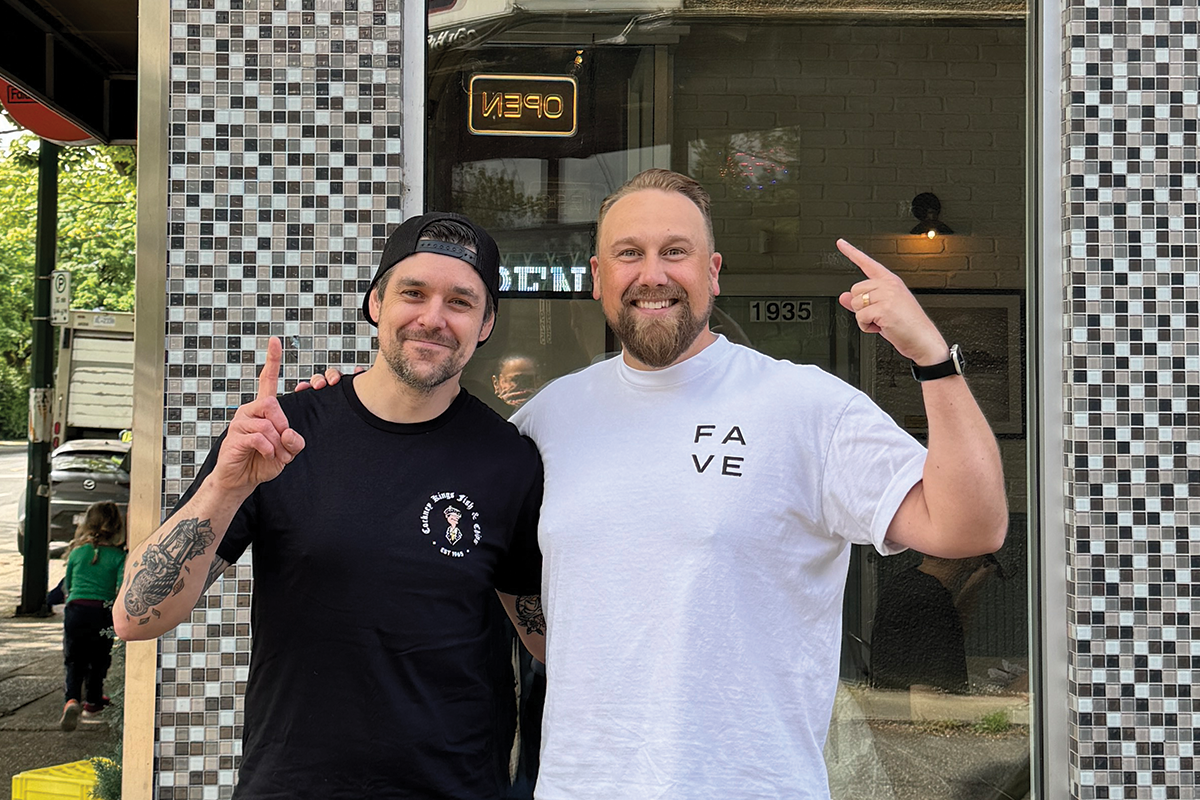
Monarch Burger, for example, was born from the cult following of the Dirty Burger first served upstairs at Campagnolo. After years of pop-ups and migrations around the city, the fan favourite has found a permanent home on Main Street. The legacy exists for good reason. Quality ingredients, careful technique, attention to detail, and an understanding that something familiar does not have to be ordinary.
That same thinking runs through almost everything Belcham has done and continues to do.
Take the whole animal seriously. Use what you have. Learn from the people who came before you. Make unfamiliar things delicious. Build something that can last.
And, increasingly, make sure the people doing the work can last, too.
For more food stories like this, check out our weekly newsletter.